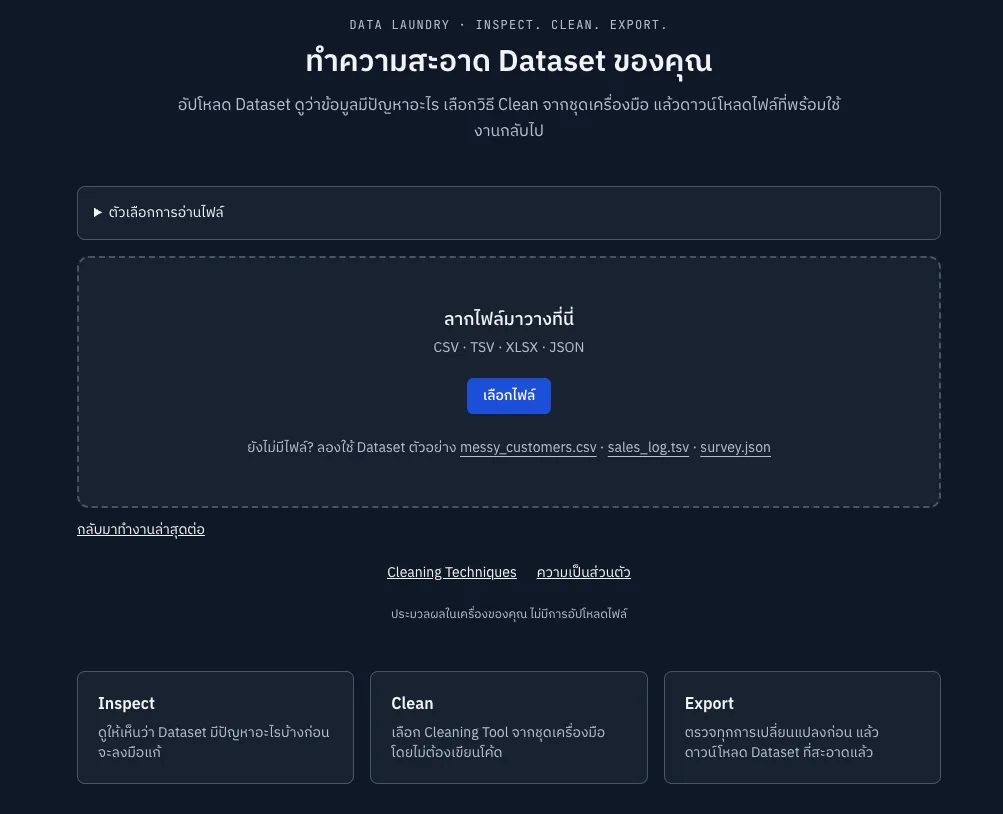
Data Laundry
PrototypeData cleaning machine for Non-technical person
Board Game Mechanics Recommendation
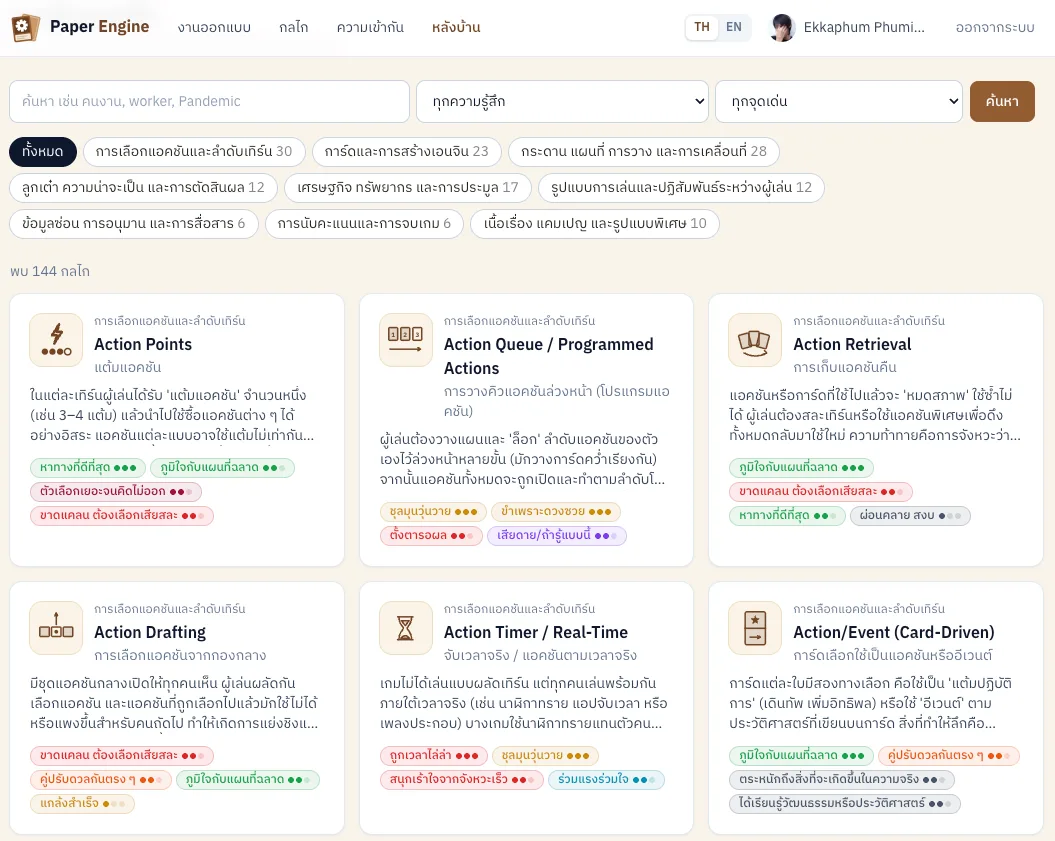
Paper Engine is a board game design tool built around a simple question: “How do we want players to feel while playing?”
Instead of starting with dice, cards, or worker placement, Paper Engine connects the experiences designers want to create with the game mechanics that can help deliver them. It offers a library of 144 mechanics, with explanations in Thai, reasons to use each mechanic, and examples from published games.
When designing a board game, we often start with mechanics we already know or enjoy, such as Worker Placement, Deck Building, or Push Your Luck, and only then figure out what kind of game to build around them.
But a mechanic that works brilliantly in one game may not create the experience we want in another.
The challenge isn't simply knowing enough game mechanics. It's understanding how each mechanic makes players feel—and why it creates that feeling.
Paper Engine was created around the idea of Experience First, Mechanics Later.
Start by choosing the feelings you want players to experience: the tension of taking a risk, the suspicion of not knowing whom to trust, the satisfaction of seeing a plan work, or the excitement of pulling off a combo.
The system then recommends mechanics that can support those experiences, explains the reasoning, points to real games that use them, and highlights design trade-offs worth considering.
The goal isn't to design the game for you. It's to help you explore possibilities, understand the relationship between mechanics and player experience, and make more intentional design decisions.
At the heart of Paper Engine is the connection between Game Mechanics and Player Experience.
The system organizes 144 board game mechanics into 9 categories and connects them to 79 player experiences. Each mechanic includes an explanation, how it works, examples from existing games, and an analysis of its strengths and potential drawbacks.
Designers can select their desired experiences, assign importance weights, and receive a ranked list of mechanics that fit their goals, along with the reasoning behind each recommendation. AI-assisted suggestions are reviewed by an administrator before being incorporated into the system.
Paper Engine also includes a Workspace for developing game ideas and keeping track of designs and versions, supporting a more structured process of experimentation, iteration, and refinement.
Paper Engine currently lets visitors try matching player experiences with game mechanics directly on the website without signing in. Users can sign in with Google to save their designs.
The tool is free to use.